


Last updated October 2026
We build and refurbish polymeric running tracks, sprint straights and long jump runways for secondary schools, colleges, councils and athletics clubs across the UK. Sport England’s Q4 2025 benchmarks put a full 6-lane track with lighting at £1,810,000 and an 8-lane track at £1,970,000, excluding VAT; jump runways and relining cost a fraction of that and are priced on survey. Send a site plan, and we arrange a survey and quote.
A full athletics track is one of the largest outdoor sports builds, so smaller elements are usually where schools start.
Swipe the table sideways to see every column.
| Item | Specification | Price | Source | Confidence |
|---|---|---|---|---|
| 6-lane athletics track | 110 m straight both sides, grass infield, artificial-surfaced throws, jumps and end fans, sports lighting | £1,810,000 | Sport England, Q4 2025 | High |
| 8-lane athletics track | Same specification | £1,970,000 | Sport England, Q4 2025 | High |
| Long jump runway and pit | Polymeric runway, sand pit | priced on survey | Your site survey | Firm once surveyed |
| Sprint straight or compact track | Polymeric on a macadam base | priced on survey | Your site survey | Firm once surveyed |
| Track resurfacing or relining | Existing track | priced on survey | Your site survey | Firm once surveyed |
Sport England’s figures include a notional allowance for external works and fees for project management, site investigation and planning. VAT, land, bad ground, hard access, long utility connections and regional costs are not in them.
How much does an athletics track cost?
A full 6-lane track with lighting is £1,810,000 and an 8-lane track £1,970,000 before VAT, on Sport England’s Q4 2025 benchmarks. Both include a grass infield and artificial surfaces for throws, jumps and the end fans. The extra two lanes add about £160,000, under a tenth of the total.
Smaller projects, such as a 60 m or 100 m sprint straight, a long jump runway or a relining, have no official benchmark. We price them after a survey so the figure reflects your ground and access.
What is a polymeric track surface, in buying terms?
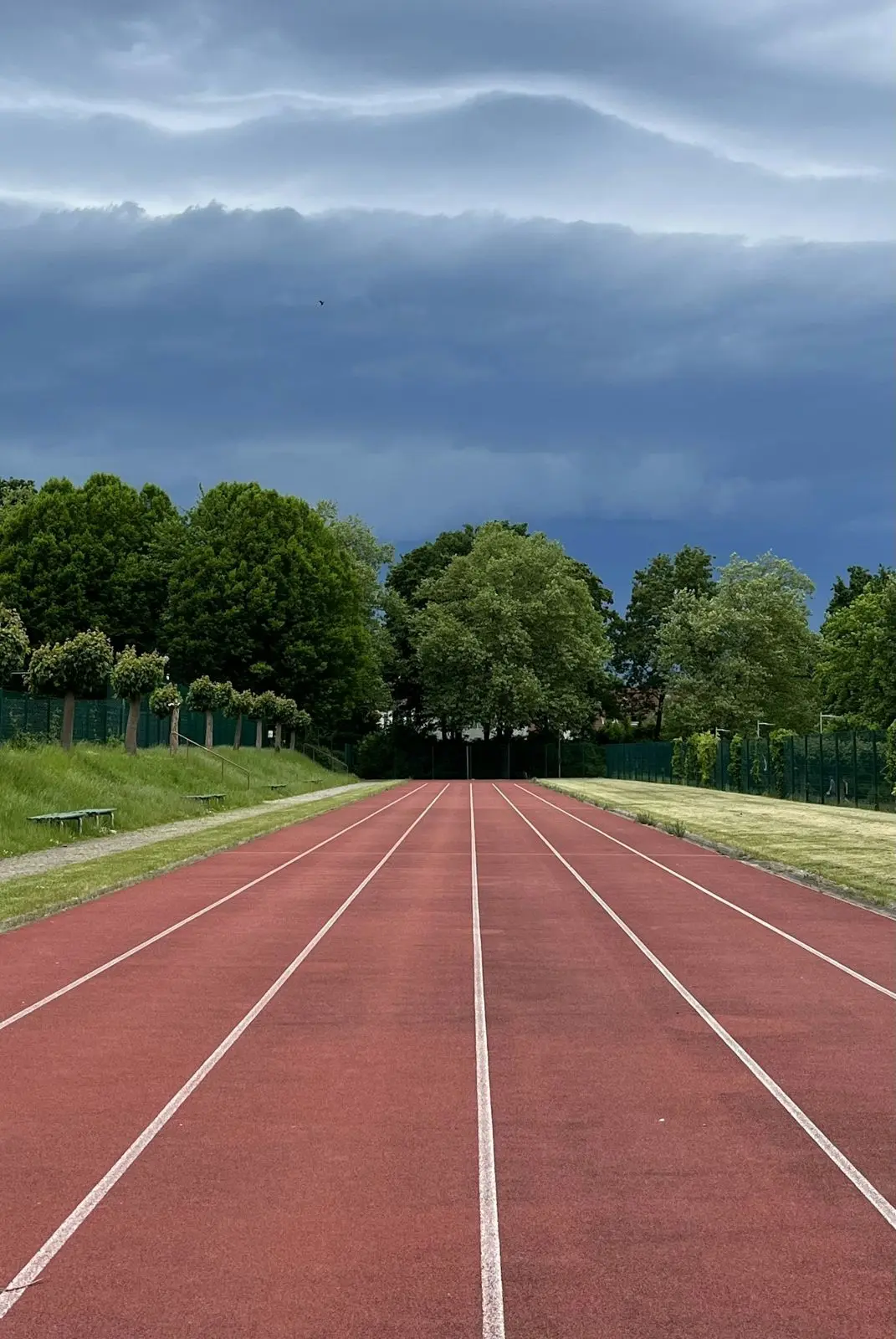
It is a rubber-based surface laid over a macadam base, and the two layers are priced separately. Ask every quote to name the surface system, its thickness, whether it is porous or sealed, and the base build-up underneath. “Tartan track” is an older name buyers still use for the same kind of surface.
How it works
- 01Send a plan and photosThe site, the surface and the date it must reopen.
- 02We check the groundLevels and where the water drains.
- 03Written quoteBuilt around your reopening date.
Can a school add long jump runways and pits on their own?
Yes, and many do before or instead of a full track. A runway on a macadam base with a polymeric top and a sand pit at the end gives a school a proper jumping facility for a small part of a track budget.
Can an existing track be resurfaced or relined?
Usually, if the macadam base is still sound. A survey checks for cracks, lifting, standing water and worn lanes. Where the base is fine, a new polymeric top or a fresh set of lane markings restores the track for far less than a rebuild. Where it has failed, the quote prices base repairs first.
How long does a track build take?
Your quote sets the time on site after the survey. A full track involves planning, drainage and lighting before any surface goes down, so it runs far longer than a runway or a relining. Tell us when the facility must reopen for the athletics season.
What funding is there for an athletics facility?
Mostly capital budgets and specialist grants, because track costs are far above small grant limits. Sport England’s Movement Fund offers £300 to £15,000 for community activity projects and expects you to raise half yourself. The playground grants guide lists the main funders, and a full track will also usually need planning; see planning permission for courts and pitches.
What’s included
- Survey of levels, drainage, ground and access
- Written quote naming surface system, thickness and base build-up
- Excavation, drainage and macadam base as quoted
- Polymeric surface laid to the quoted specification
- Lane, start and event markings
- A walk of the finished track with you
What’s not included
- VAT, shown separately
- Lighting, fencing and spectator areas, unless listed
- Throws cages and jump equipment, unless listed
- Unforeseen ground conditions, priced before any extra work
Illustrative example
From the table only. A college compares a 6-lane and an 8-lane track to Sport England’s specification. The benchmarks are £1,810,000 and £1,970,000 excluding VAT, a difference of £160,000. Poor ground, a long cable run for the lights or a regional uplift would sit on top of either.
Who does the work
Running tracks are laid by the surfacing teams. Alex Winser runs the track project from the first survey to handover, the surfacing teams build the base and lay the track, and the specialist teams handle the lighting and drainage.
Often needed alongside
Primary schools usually need a daily mile track rather than a full track. Sites with space for a winter pitch inside or beside the track should look at 3G football pitch construction. Clubs can read our sports clubs page.
FAQs
Do you build indoor tracks?
This site covers outdoor tracks.
Can a track have a grass infield used for football?
Yes; Sport England’s benchmark includes a grass infield.
Is a polymeric surface porous?
Some systems are and some are sealed; the quote names which.
Can you add a sprint straight to a school field?
Yes, priced on survey.
What do you need to quote a running track?
A site plan, the events you want to cover, and any deadline for the season.
Sources
- Sport England, Facility Cost Guidance Q4 2025, published Feb 2026
- Sport England, Movement Fund, read Oct 2026